غالبًا ما نواجه جميعًا في عملنا الحاجة إلى اللجوء إلى شخص ما للحصول على المساعدة. في اللغة الإنجليزية ، قد يكون من الصعب فهم الفرق بين الطلب المهذب وطلب القيام بشيء ما ، نظرًا لوجود قواعد راسخة تستند إلى العادات والمعايير المقبولة بشكل عام بدلاً من المنطق. ومع ذلك ، من المهم جدًا أن تشعر بهذا الاختلاف. من خلال سوء التعامل ، لا يمكننا فقط أن نفشل في تحقيق النتيجة المرجوة ، ولكن أيضًا نسيء إلى المحاور. كما تعلمون بالفعل ، في اللغة الإنجليزية ، على عكس العديد من اللغات الأخرى ، فإن مجرد إضافة "من فضلك" لا يكفي. نظر زميلنا ، سكوت بويس ، مدرب اللغة EPAM ، في عدة طرق لكتابة استفسارات باللغة الإنجليزية وبحث في الأخطاء الشائعة.
ستكون المقالة مفيدة بشكل خاص لأولئك الذين يضطرون غالبًا إلى التواصل باللغة الإنجليزية في العمل.
كيف تطلب بأدب من شخص ما القيام بشيء ما
عقل
يعني "التفكير" في سياق الطلبات الاعتراض / الاعتراض على شيء ما. شفهيًا ، يمكن استخدام هذه العبارة لتقديم طلب بدلاً من طلب ، اعتمادًا على التنغيم والسياق. ومع ذلك ، يعتبر هذا عادةً طلبًا كتابيًا ، على سبيل المثال:
هل تمانع في إرسال ذلك قبل نهاية اليوم؟
لاحظ أن العقل يتبعه gerund. لا يمكننا استخدام صيغة المصدر ، أي لا يمكنك أن تقول:
هل تمانع في إرسال <…>؟
لجعل هذا الطلب أكثر تهذيبًا ، يمكنك وضع ظرف مناسب بعد كلمة " عقل" :
Would you mind terribly sending that before the end of the day?
, , , ‘no’, ‘yes’― , :
No, I don’t mind doing that at all.
Favour
:
Could you do me a (big) favour? Can you send me that before the end of the day?
, ‘do’, ‘make’. ( , ‘favour’ ‘u’ ― ‘favor’).
Wonder
:
I was wondering if you could send me that before the end of the day.
, — ‘was wondering’ ‘could’. «» ‘mind’, ‘favour’ ‘wonder’, :
I was wondering if you would mind doing me a huge favour.
Appreciate
:
I would really appreciate it if you could send it to me before the end of the day.
, ‘it’. ‘appreciate’ ! - .
‘really’ ‘very’. , ‘very’ (. . — , , much: I would very much appreciate it …).
, ‘really’, , :
I would appreciate it if you could send it to me before the end of the day.
Grateful
‘Grateful’ ‘appreciate’. , ‘grateful’ — , (no ‘it’!):
I’d be really grateful if you could send it to me before the end of the day.
(‘grateful’ — ), ‘really’ ‘very’.
‘appreciate’, ‘really’/’very’ — .
Kind
, ‘Would you be so kind<…>’ , EPAM. , . :
Would you be so kind AS to send that to me before the end of the day?
, ‘as’, "so... as...".
, « » ( ). , , , . , ; :
“No, 'tis not so deep as a well, nor so wide as a church door, but 'tis enough.”
21 ‘so’ (, , ) ‘as’. , :
“No, it’s not as deep as a well, nor as wide as a church door, but it’s enough.”
“Would you be so kind as to <…>” — . , , . , - - ( ), .
- (Telling someone to do something)
, ‘could’. , :
Could you please send that to me before the end of the day?
, , — , , — , , . .
, ‘please’, ‘ask’:
Could I ask you to send that to me before the end of the day?
, , , :
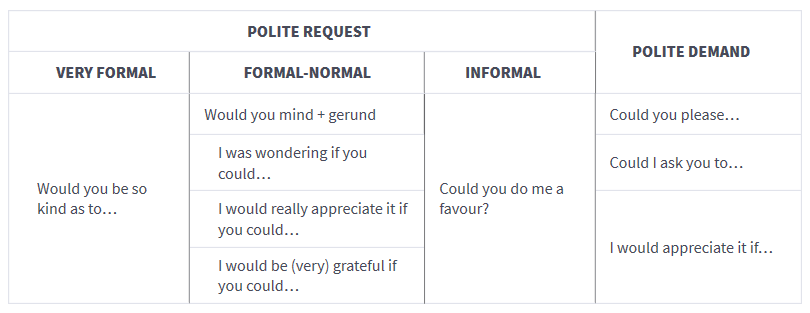
, !
:
“Go wisely and slowly. Those who rush stumble and fall.” .. « . , , ». , : « ― ».