المقالات السابقة:
تحسينات نظام التسلق من المجموعة 2 والمزيد
أضف عقدة RayCast2D إلى مشهد المشغل.
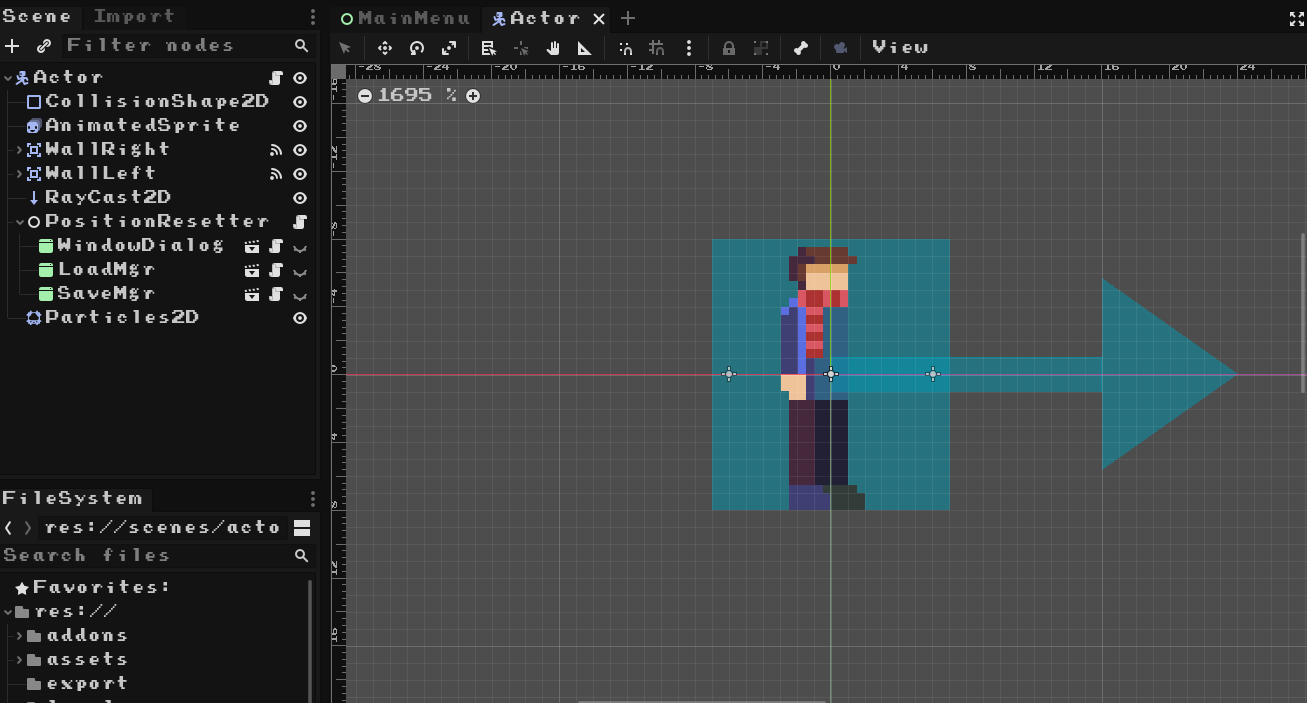
هذا ما تبدو عليه شخصيتي. أضف RayCast إلى بداية السهم.
بشكل عام ، سأعرض جميع رموز شخصيتي وأحاول التعليق عليها بأكبر قدر ممكن من الوضوح.
#       ,           .

extends KinematicBody2D

signal timer_ended #      _process

const UP_VECTOR: Vector2 = Vector2(0, -1) 	#
const GRAVITY: int = 40						#
const MOVE_SPEED: int = 100				#
const JUMP_POWER: int = 480				#
const CLIMB_SPEED: int = 40				#
const WALL_JUMP_SPEED: int = 80			#

enum States {ON_FLOOR, ON_WALL} #   ,     2

onready var ray_cast: Object = $RayCast2D #      .
var velocity: Vector2 = Vector2.ZERO # .
var walls: Array = [false, false, false] #   .  ,  ,  .

var timer_enabled: bool = false	#
var climbing: bool = false		#    ,
var is_wall_jump: bool = false		#     ,
var is_double_jump: bool = true 	#

var right_pressed: float = 0		#        ,
var left_pressed: float = 0

var timer: float = 0				#
var prev_direction: float = 0		#  .
var direction: float = 0			#   .

var keys: int = 0 						#  .    ,
var current_state: int = States.ON_FLOOR	#

func _ready():
	ray_cast.add_exception($WallLeft) #       ray_cast
	ray_cast.add_exception($WallRight)
	ray_cast.add_exception(self)

func _process(_delta: float) -> void: #  _process
	if timer > 0 or timer_enabled:
		timer -= _delta		#    _delta
	if timer <= 0 and timer_enabled:
		timer_enabled = false
		timer = 0		#
		emit_signal("timer_ended") #   .
	if self.direction != 0:
		self.ray_cast.cast_to *= -1
		self.prev_direction = self.direction	#        0
func _physics_process(_delta: float) -> void:
	self.control_character()
	self.pause_opened()	#    -
	if (!self.climbing):			#   ,
		if (!self.is_wall_jump): 	#       self.velocity.y
			self.velocity.y += GRAVITY
		else:				#    4
			self.velocity.y += float(GRAVITY) / 4
	self.velocity = self.move_and_slide(self.velocity, UP_VECTOR) 	#  self.velocity

func check_states() -> void:
	if self.is_on_floor():
		self.current_state = States.ON_FLOOR
		is_double_jump = true
	elif self.is_on_wall():
		self.current_state = States.ON_WALL
		is_double_jump = true
	elif self.is_on_floor() and self.is_on_wall():
		self.current_state = States.ON_WALL

func fall() -> void:
	self.velocity.y += GRAVITY

func update_controls(): 	#       ""  ""
	if !is_wall_jump: 	#       -
		self.left_pressed = Input.get_action_strength("ui_left")
		self.right_pressed = Input.get_action_strength("ui_right")

func control_character() -> void:	#
	check_states()				#
	update_controls()			#
	self.interact_with()			#    +
	match current_state:
		States.ON_WALL:
			self.climb()
			self.move()
			if !climbing:
				self.jump()
				self.fall()
			self.wall_jump()
#		States.IN_AIR: #
#			self.jump()
#			self.move()
#			self.fall()
		States.ON_FLOOR:
			self.jump()
			self.move()

func climb():
	if (walls[0] or walls[2]):	#      - self.climbing =    "ui_climb".
		self.climbing = Input.is_action_pressed("ui_climb")
	else:				#
		self.climbing = false

func climb_up() -> void:		#
	self.velocity.y = (CLIMB_SPEED)

func climb_down() -> void:	#
	self.velocity.y = (-CLIMB_SPEED)

func move() -> void: 		# .   ,
	self.direction = self.right_pressed - self.left_pressed
	if (self.climbing and !self.is_wall_jump):
		if self.walls[0]:		#
			if direction > 0:	#    -
				climb_up()
			elif direction < 0:	#     -
				climb_down()
			else:			#
				self.velocity.y = 0
		elif self.walls[2]:	#          ,
			if direction < 0:
				climb_up()
			elif direction > 0:
				climb_down()
			else:
				self.velocity.y = 0
#		else:	#      ,
#			self.velocity.y = 0
	else: #
		self.velocity.x = self.direction * float(MOVE_SPEED) * (1 + (float(self.is_wall_jump) / 2))
	if !(climbing): #
		if direction == 0:
			$AnimatedSprite.flip_h = (-self.prev_direction >= 0)
			$AnimatedSprite.play("idle")
		else:
			$AnimatedSprite.flip_h = direction < 0
			$AnimatedSprite.play("run")
	return

func jump() -> void: #
	if Input.is_action_just_pressed("ui_accept"):
		if is_on_floor():
			self.velocity.y = -JUMP_POWER
		if !is_on_floor() and is_double_jump:
			is_double_jump = false
			self.velocity.y = -JUMP_POWER

func wall_jump() -> void:
	if Input.is_action_just_pressed("ui_accept") and Input.is_action_pressed("ui_climb"):
		self.is_wall_jump = true
		self.velocity.y = -JUMP_POWER
		if walls[0]:
			self.timer = 0.3
			self.timer_enabled = true
			self.right_pressed = 1		#        -
			yield(self, "timer_ended")	#
			self.right_pressed = Input.get_action_strength("ui_right")
			#
		elif walls[2]:
			self.timer = 0.3
			self.timer_enabled = true
			self.left_pressed = 1		#        -
			yield(self, "timer_ended")
			self.left_pressed = Input.get_action_strength("ui_left")
			#
		self.is_wall_jump = false #

func interact_with() -> void: 						#
	if Input.is_action_pressed("ui_use"):			#
		var coll: Object = self.ray_cast.get_collider()	#
		if coll:								#     null
			if coll.has_method("open"):			# ,
				use_key(coll)
			elif coll.has_method("interact"):
				use_object(coll)

func use_object(collider: Object) -> void:	#
	collider.interact(self)				#

func use_key(collider: Object) -> void:	#    .
	if self.keys > 0:				#
		collider.open()				#
		self.keys -= 1				#

func key_picked_up():
	self.keys += 1
func _on_WallRight_body_entered(_body):	#       .
	if (_body.name != self.name):			#    -  -
		self.walls[2] = true				#    walls  true  false.
func _on_WallRight_body_exited(_body):	#
	self.walls[2] = false					#
func _on_WallLeft_body_entered(_body):	#
	if (_body.name != self.name):			#
		self.walls[0] = true				#
func _on_WallLeft_body_exited(_body):		#
	self.walls[0] = false					#

func dead():
	# $Particles2D.emitting = true #      -
	LevelMgr.goto_scene("res://scenes/dead_screen/dead_screen.tscn") #    .

func pause_opened(): #
	if Input.is_action_just_pressed("ui_cancel"): #
		$PositionResetter/WindowDialog.popup_centered()
خاتمة
في الوقت الحالي ، هذا هو أحدث رمز حرف قمت بإنشائه للتو. نظرًا لحقيقة أن الكود جاهز تمامًا ، فليس لدي ما أضيفه بشكل منفصل. وبما أنني تلقيت دروسًا عن الفخاخ في دورة منفصلة ، فليس لدي أيضًا ما أقوله حول أمثلة استخدام نظام التفاعل. تساءلت أيضًا عما تفضل أن تكتشفه في الجزء التالي وقدمت أدناه استطلاعًا يتكون من أفكار للميكانيكا تطرقت إلى ذهني. شكرا للقراءة وحتى المرة القادمة.